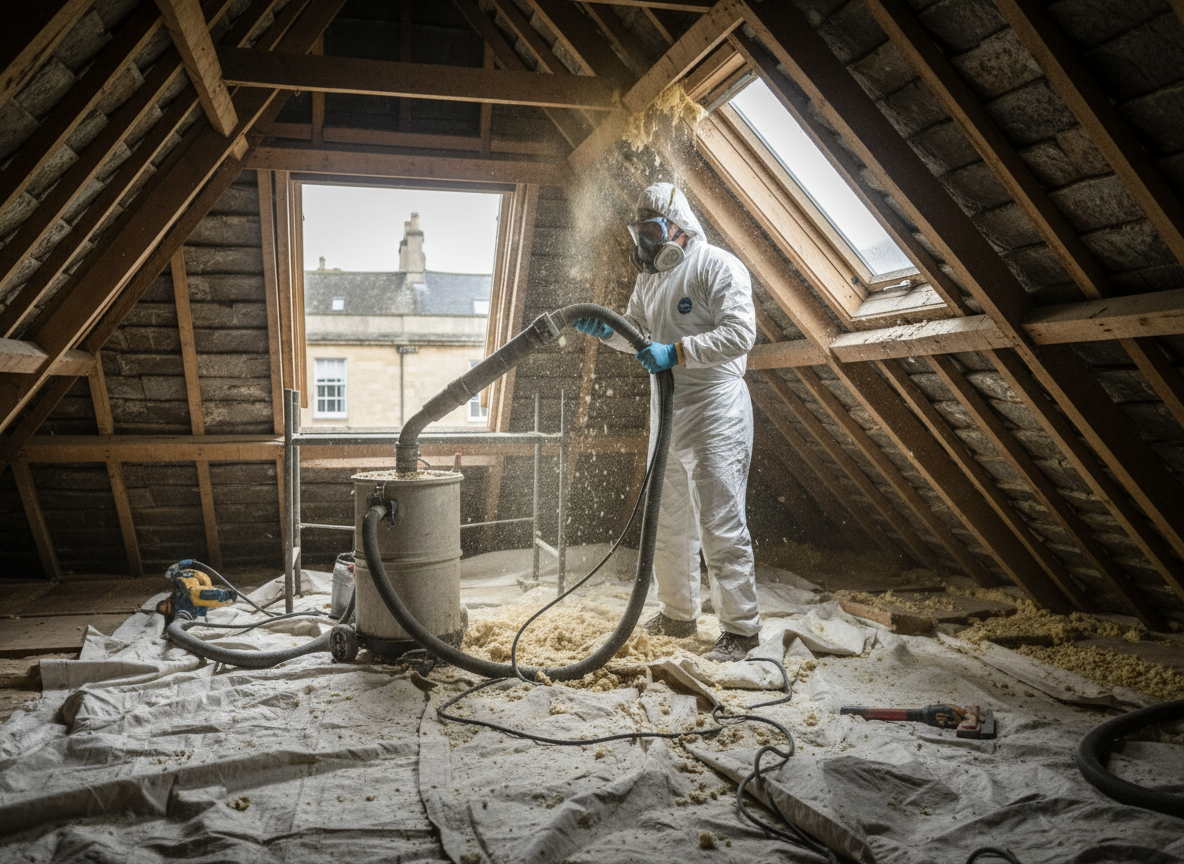
Bath's older housing stock, particularly the Georgian terraces around the Circus and Royal Crescent, often received spray foam insulation in roof voids during later energy upgrades. Over time the material can trap moisture against timber joists and stonework, leading to rot that only becomes visible when ceilings stain or lofts are inspected. Same day removal requires cutting access hatches without damaging original lath and plaster, then extracting the foam in sections while protecting the fragile Bath stone walls below.
Winter in the Bath area brings prolonged damp periods that accelerate problems once foam starts breaking down. Homeowners in areas like Larkhall and Walcot frequently call after discovering musty smells or higher heating bills. The work must be completed before further water ingress reaches the party walls shared between neighboring properties, which is common in these tightly packed historic streets.
Extraction crews work from the provided base at Compass Court on Circus Mews to reach jobs across the city the same day. They use negative-pressure setups to keep dust out of living spaces below and bag all waste on site before leaving. This approach prevents the foam particles from settling into the intricate cornices and fireplaces that define so many Bath homes.
Handling Historic Properties
Removal teams must avoid disturbing original roof timbers or breaching listed building rules that apply throughout central Bath. Careful documentation of the void before work starts protects both the property and the owner from later disputes with conservation officers.
Technician insight
In Bath, the thing that catches most people out with same day Spray Foam Removal is how the foam bonds to the underside of old stone slate roofs in Georgian terraces. Once winter damp sets in around the Circus and nearby streets, the material pulls away in wet clumps that stain the ceilings below if extraction is delayed even a day.
Urgent Extraction in a Larkhall Terrace
A homeowner in Larkhall noticed brown stains on a bedroom ceiling after heavy rain. Inspection showed spray foam in the void had trapped moisture against the joists. The team removed the foam the same day, bagged all material on site, and left the void ventilated so the timber could dry before any new insulation was considered.
How it works
- 1
Site Assessment
Technician inspects the loft or void from the address in Bath, checking for timber condition, access points, and any signs of moisture before starting extraction.
- 2
Containment Setup
Negative air machines and floor protection are placed to keep dust and debris contained within the work area, especially important in multi-story Georgian buildings.
- 3
Foam Extraction
Foam is cut and removed in manageable pieces, with all material bagged on site and carried out without passing through finished rooms where possible.
- 4
Final Clearance
Voids are vacuumed, access points are secured, and the property is left ready for the owner to arrange replacement insulation or further inspection.
Pricing
Pricing depends on access difficulty, depth of foam, and property size; quotes are provided after the initial inspection.