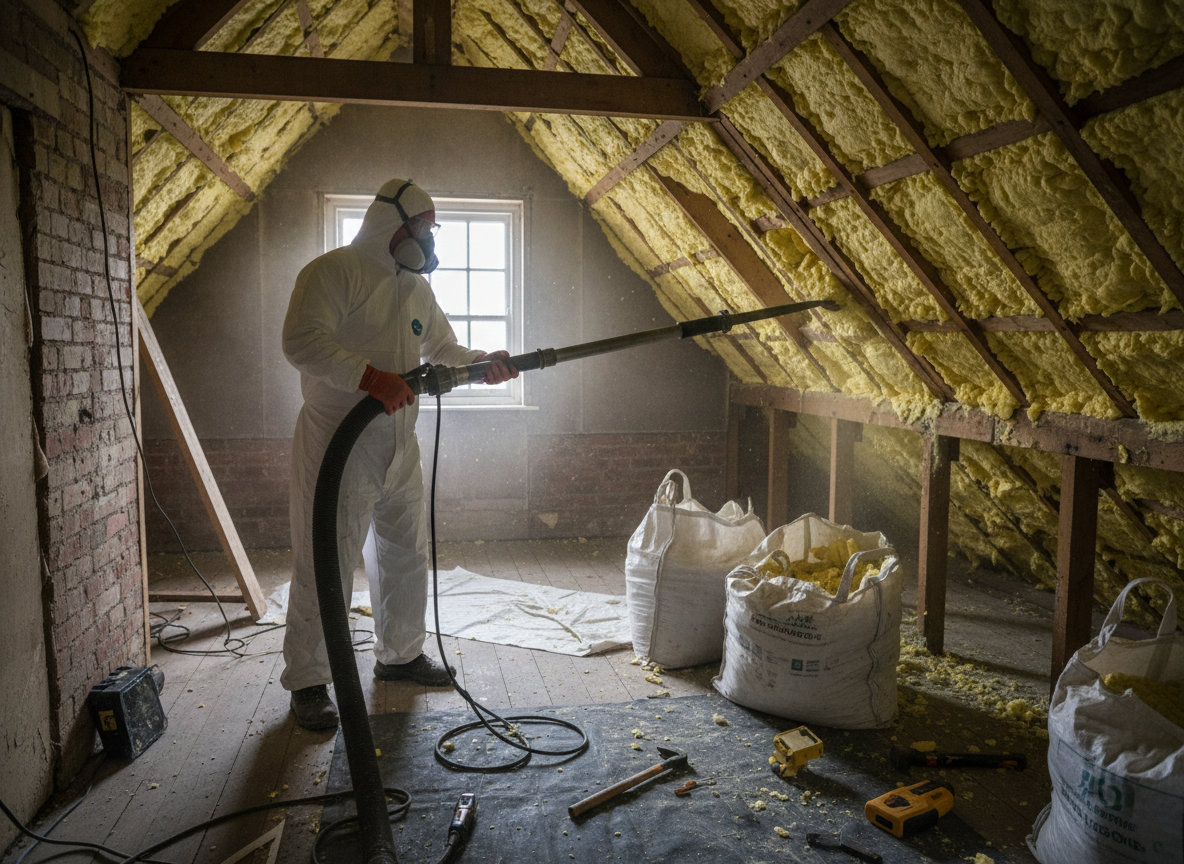
Bath's housing stock is dominated by Georgian and Victorian terraces with stone walls and timber joists that predate modern insulation. Closed-cell foam bonds tightly to these irregular surfaces and often traps moisture against the fabric, leading to rot in roof voids and between floors. Removal requires staged mechanical and chemical methods to avoid pulling lath or fracturing Bath stone, particularly in properties near the Circus or Royal Crescent where listed-building consent may apply to any internal alterations.
Open-cell foam installed in the 2000s is softer and easier to cut but still fills every gap around original sash windows and chimney breasts. In the damp Somerset climate, water tracks along the foam edges and saturates rafters, so technicians must map moisture levels before cutting. Edge cases include foam applied over existing mineral wool in lofts of 1930s semis in Odd Down, where partial removal can leave hidden pockets that continue to hold condensation.
Homeowners sometimes attempt DIY scraping, which releases isocyanates and leaves residue that prevents new breathable insulation from adhering. Professional teams use negative-air containment and HEPA filtration to protect adjacent living spaces, then treat exposed timber with borate solutions before handing over for follow-up ventilation work. Every job ends with a written report noting any structural timber that needs further inspection by a local carpenter familiar with Bath's hillside properties.
Seasonal Considerations
Winter calls increase when heating drives warm air into cold lofts and reveals trapped damp. Summer jobs focus on attics where heat has made the foam brittle and easier to section, but pollen and dust require extra sealing around skylights common in Bath conversions.
Technician insight
In Bath, the thing that catches most people out with Residential Spray Foam Removal is how foam bonds to the irregular stone and lath in pre-1900 buildings once West Country rain has driven moisture behind it for a decade.
Loft Extraction in a Circus Mews Terrace
Persistent musty smell in a central Bath loft prompted inspection. Closed-cell foam had been sprayed directly onto original rafters without ventilation channels, trapping damp against the stone gable. We removed the foam in controlled strips, treated the joists, and cleared the void so airflow could resume.
How it works
- 1
Site Assessment
Measure foam depth and type, check for moisture in joists, and note any listed-building constraints in central Bath terraces.
- 2
Containment Setup
Install negative-air machines and floor protection to prevent dust migration into living areas of multi-storey Georgian homes.
- 3
Layered Removal
Cut and peel foam in sections using oscillating tools and approved solvents, preserving original timber and stone where possible.
- 4
Timber Treatment and Clearance
Apply preservative to exposed wood, vacuum residue, and remove all waste for licensed disposal before final walkthrough.
Pricing
Upfront quote after on-site inspection; cost driven by access, foam thickness, and whether listed-building care is required.