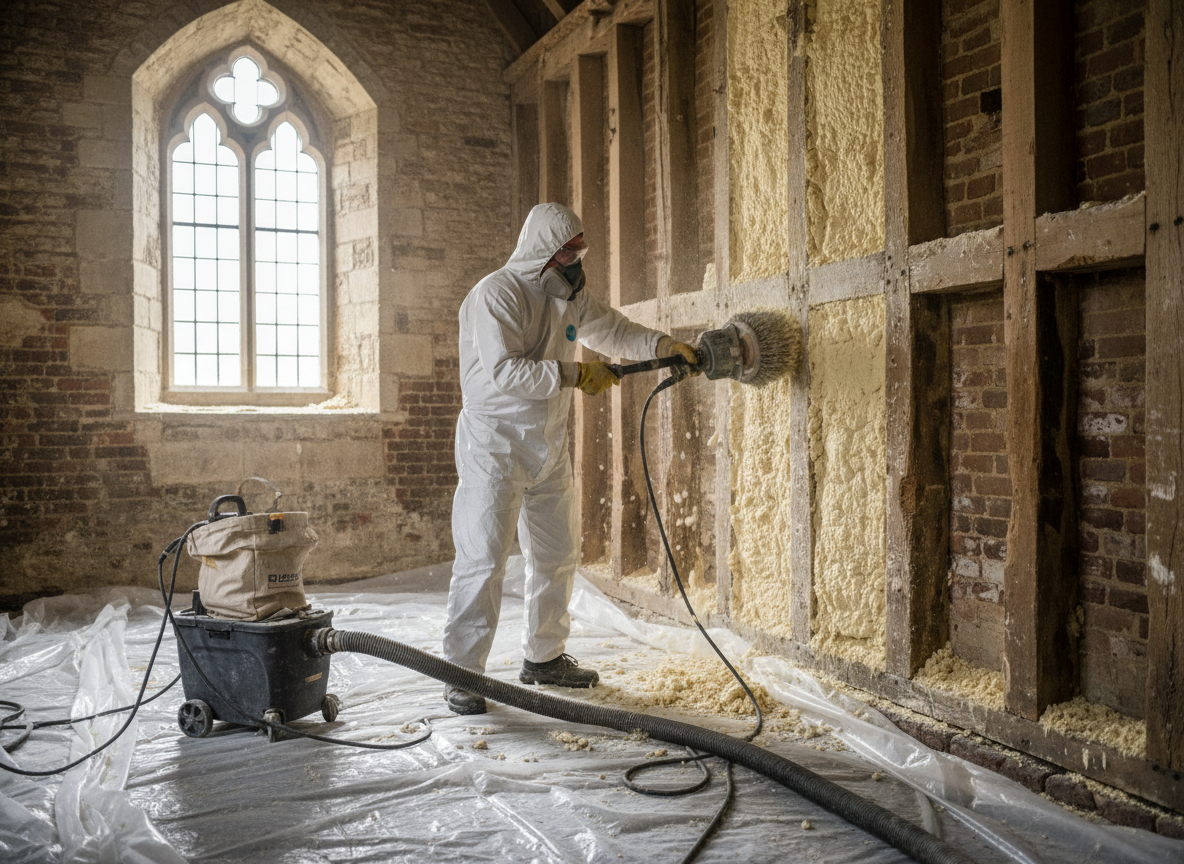
Bath's commercial stock often sits inside Grade II listed Georgian and Victorian buildings where spray foam was applied directly to stone or lath-and-plaster ceilings. Removing it without damaging original fabric requires careful heat application, controlled peeling and constant moisture monitoring because the local limestone holds water and releases it slowly once the foam is gone. Crews working in properties near the Circus or along Walcot Street routinely find hidden timber decay that only appears after the foam is stripped.
Edge cases appear in converted retail units where foam was sprayed over electrical trunking or into roof voids shared with neighbouring premises. These jobs demand phased containment to keep dust and fibres out of trading spaces below. In older commercial terraces, party walls can channel damp across several units, so removal teams check adjoining properties before starting and leave temporary ventilation paths until the masonry dries.
Local building control expects a method statement and dust-suppression plan for any work inside listed structures. Contractors must also coordinate with the landlord or managing agent because many Bath commercial leases restrict noisy works to evenings or weekends. After removal the substrate is left exposed for inspection so any necessary repairs to stone or joists can be priced accurately before new insulation is considered.
Technician insight
In Bath, the thing that catches most people out with Commercial Spray Foam Removal is the way Georgian stone walls around Circus Mews and the city centre trap moisture once the foam is stripped; if you don't leave the building ventilated for weeks the hidden joist ends start to rot before anyone notices.
Retail Unit Near Walcot Street
Foam in the ceiling void of a ground-floor shop had caused persistent musty smells. Survey showed the foam had bridged a leaking gutter joint and trapped water against original lath. We removed the foam in sections over two evenings after trading hours, exposed the wet timber and left temporary fans running. The landlord was able to schedule joist repairs before re-letting.
How it works
- 1
Site Survey And Risk Assessment
Measure foam depth and map access routes through the commercial unit, checking for listed features and shared services.
- 2
Containment Setup
Install dust barriers and negative-pressure zones to protect trading areas and neighbouring tenancies.
- 3
Controlled Removal
Use low-heat methods to peel foam from stone and timber, bagging waste on site for licensed disposal.
- 4
Substrate Inspection And Handover
Photograph exposed surfaces, note any defects and leave the space ventilated for final checks.
Pricing
Commercial quotes are calculated from floor area, foam thickness and access constraints; most Bath jobs require an on-site visit.