2026-10-22 ·
Cost Guide for Spray Foam Removal Bath
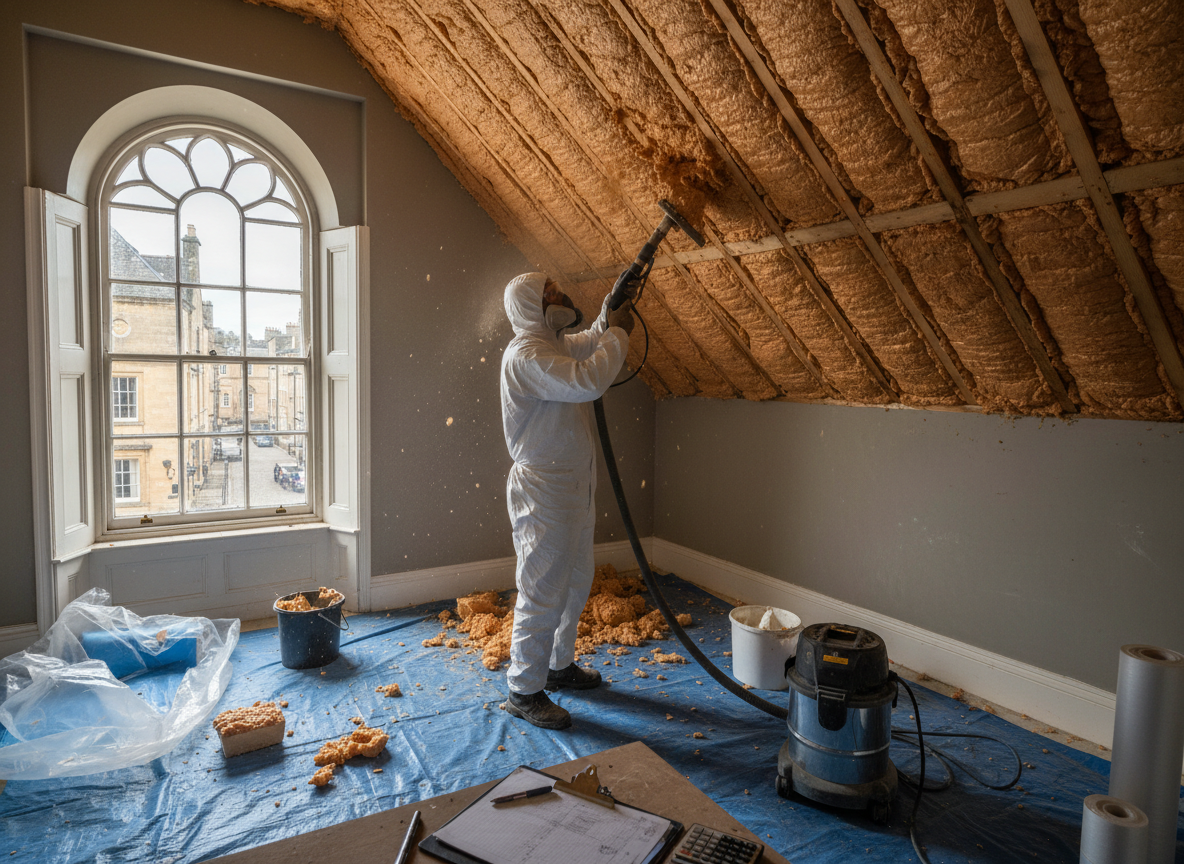
Spray foam removal in Bath typically costs between £4,500 and £11,000 for a standard three-bedroom Victorian terrace, though prices can reach £14,000 for larger Georgian townhouses or those needing extra care around original stonework. These figures cover assessment, safe extraction and disposal but vary with property age, foam type and access constraints common in the Bath area. Homeowners in Circus Mews or nearby streets often face extra considerations due to tight mews layouts and protected facades.
Factors That Influence Pricing in Bath Housing Stock
Bath's housing stock is dominated by Georgian and Victorian terraces built between 1750 and 1900, many with narrow roof voids and thick stone walls that complicate access. Older properties frequently contain closed cell foam installed in the 2000s, which bonds tightly to timber and requires longer removal times than open cell material. Seasonal weather also plays a role: winter damp in the Avon valley can slow drying after extraction, while summer heat makes loft work more uncomfortable and sometimes extends project duration by a day or two. Properties near the river or on sloping sites in Widcombe and Lyncombe may need additional moisture checks before work begins. Labour rates remain consistent across the Bath area, but travel from the Compass Court base adds little when jobs stay within the city limits.
Typical Cost Breakdown by Property Type
A standard loft spray foam removal in a two-up two-down terrace runs £4,500 to £6,500, covering assessment, extraction and basic disposal. Larger three- or four-bedroom homes with extended rooflines often fall between £7,000 and £9,500. Georgian townhouses or listed buildings near the Circus frequently reach £10,000 to £14,000 because of the extra time needed to protect original features and obtain consent. Cavity wall spray foam removal adds £2,000 to £4,000 on top of loft work when both areas are treated. These ranges assume 40 to 80 square metres of foam; anything larger pushes costs higher. Quotes always include a site visit to measure actual coverage rather than relying on floor plans alone.
Additional Expenses Common in the Bath Area
Scaffolding for properties with limited internal access adds £800 to £1,800 on many jobs. Waste disposal fees for closed cell foam average £400 to £700 per skip, with two skips typical for a terrace loft. If the property sits within a conservation area or is Grade II listed, specialist surveys and consent applications can add £600 to £1,200. Homeowners in areas such as Bathwick or Oldfield often request dust containment measures that increase labour by half a day. These extras are quoted separately after the initial inspection so there are no surprises once work starts.
How to Compare Quotes Without Overpaying
Obtain three written quotes that each list the exact square metreage, foam type and disposal method. Avoid any provider that quotes solely over the phone without visiting Compass Court or the property itself. Check that the quote covers making good after removal, including ventilation upgrades where needed. Local operators familiar with Bath stone and narrow access routes usually complete the work faster than national firms that travel from Bristol or further afield. A clear timeline and fixed price for the agreed scope remain the best protection against unexpected additions.
Planning Your Project Around Local Conditions
Most Bath homeowners schedule removal during drier months when lofts are easier to ventilate afterward. Properties near the Kennet and Avon Canal can experience higher humidity, so allowing extra drying time prevents new issues. Linking the work with other insulation upgrades, such as switching to traditional mineral wool, often keeps overall disruption to a single week. Always confirm parking arrangements near the address, especially in central zones where permit restrictions apply. A final walkthrough ensures the loft is left clear and safe for future use.